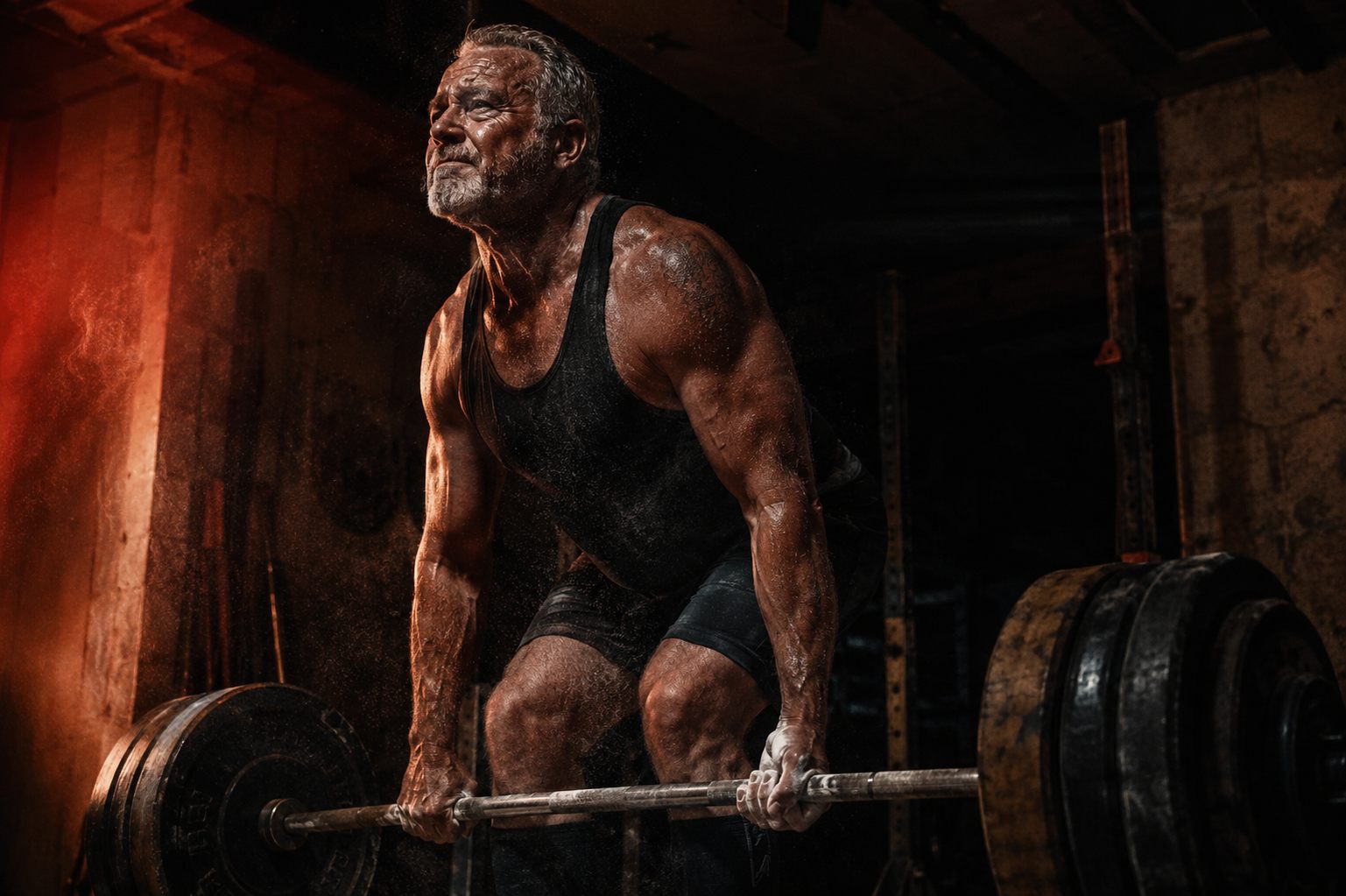
Heavy lifting after 50 works. The research is clear, the anecdotes are everywhere, and if you've been under a bar for any length of time, you already know it's true. Older lifters can get strong. Masters athletes break records. Strength doesn't expire at 49.
But the how is different. The recovery cycle you ran at 25 — high frequency, quick bounce-back, grind through fatigue — isn't the same cycle your body runs now. That's not a complaint. It's physiology. And the lifters who figure this out early stop getting beaten up and start getting strong.
The problem isn't your age. The problem is programming designed for someone else's body.
This article is a deep dive within our broader guide to powerlifting over 50 — specifically, the recovery cycle that makes readiness-based programming necessary in the first place.
The core issue: Most strength programs are built around a younger lifter's recovery timeline. When an older lifter follows that same cadence — same volume, same frequency, same rest intervals — they're training into accumulated fatigue instead of out of it. Progress stalls, joints complain, and the whole thing gets labeled "too old to make gains." That's a programming problem, not an age problem.
Why Your Cycle Is Genuinely Different
Three things shift as you age that directly affect your training cycle. None of them mean you can't lift heavy. All of them mean your programming needs to account for them.
None of this means lower the bar — literally or figuratively. It means understanding the actual phases your body moves through after a heavy session, and respecting all of them, not just the first one.
The 5-Phase Training Cycle
For the older lifter — what actually happens between sessions. Tap each phase to explore what's happening in your body.
The pattern that breaks older lifters: Training again during Phase 2 (Acute Fatigue) because the calendar says it's time. You feel "okay enough" — not wrecked, just a bit off. That's the trap. CNS fatigue doesn't feel like muscle soreness. It feels like a slight heaviness, reduced motivation, and bar speed that's just a little slow. If you train hard into that state, you don't complete the cycle — you restart it from a lower baseline.
What This Means for Your Programming
The cycle above isn't an excuse to train less. It's a map for training better. Once you understand which phase you're in, you can make intelligent decisions about intensity, volume, and timing. Here's what changes when you program around the actual cycle:
Frequency Is Earned
High frequency works — when you're actually recovered. Two heavy sessions a week at full readiness beats four where two are grinding through residual fatigue.
Volume Lives in the Details
Total weekly volume matters less than quality volume. Ten heavy sets from a recovered CNS beats fifteen where the last five just accumulate damage.
Active Recovery Is a Training Day
Phase 3 isn't a day off. It's a deliberate day. Movement, blood flow, mobility — these accelerate the cycle. Doing nothing is slower than doing something light.
Readiness Replaces the Calendar
"Monday is squat day" is fine at 25. After 50 you need to know where you are in the cycle. Sleep, bar speed, perceived exertion tell you more than the date.
Strength Training Over 50: The Non-Negotiables
Everything above about the recovery cycle feeds into a few concrete programming principles for lifters over 50. These aren't caveats — they're the method.
Powerlifting After 50 Is Not a Compromise
Masters powerlifting is one of the most actively growing segments of the sport. The IPF Masters divisions go up to 90+. That's not a "still going" story — those are lifters who got better at programming as they aged, not worse.
The squat, bench, and deadlift don't stop working after 50. The SBD is still the most efficient strength stimulus available. What changes is the surround: how you prepare, how you recover, how frequently you can redline, and how much technical margin you keep in reserve. The lifters who compete into their 60s and 70s aren't grinding the same program they ran at 30 — they've built a system that respects the full recovery cycle, manages CNS load deliberately, and uses readiness to decide when to push and when to back off.
The goal isn't to train like you're still 30. It's to keep you under the bar at 60, 70, and beyond — while still hitting real PRs along the way. That's not a reduced ambition. It's a longer game.
The Bottom Line
Heavy lifting after 50 works. The recovery cycle above is proof of mechanism — your body still responds to training stimulus, still adapts, still gets stronger. The phases are all still there. They just take longer and have less margin for error. The lifters who thrive after 50 are the ones who:
- Understand which phase of the cycle they're actually in
- Use readiness signals instead of just the calendar
- Treat active recovery and sleep as training variables
- Keep movement quality as the irreducible standard
- Program volume around what they can recover from — not what they can survive
- Build deloads in before the body demands them
Your cycle is different. Program for your cycle.