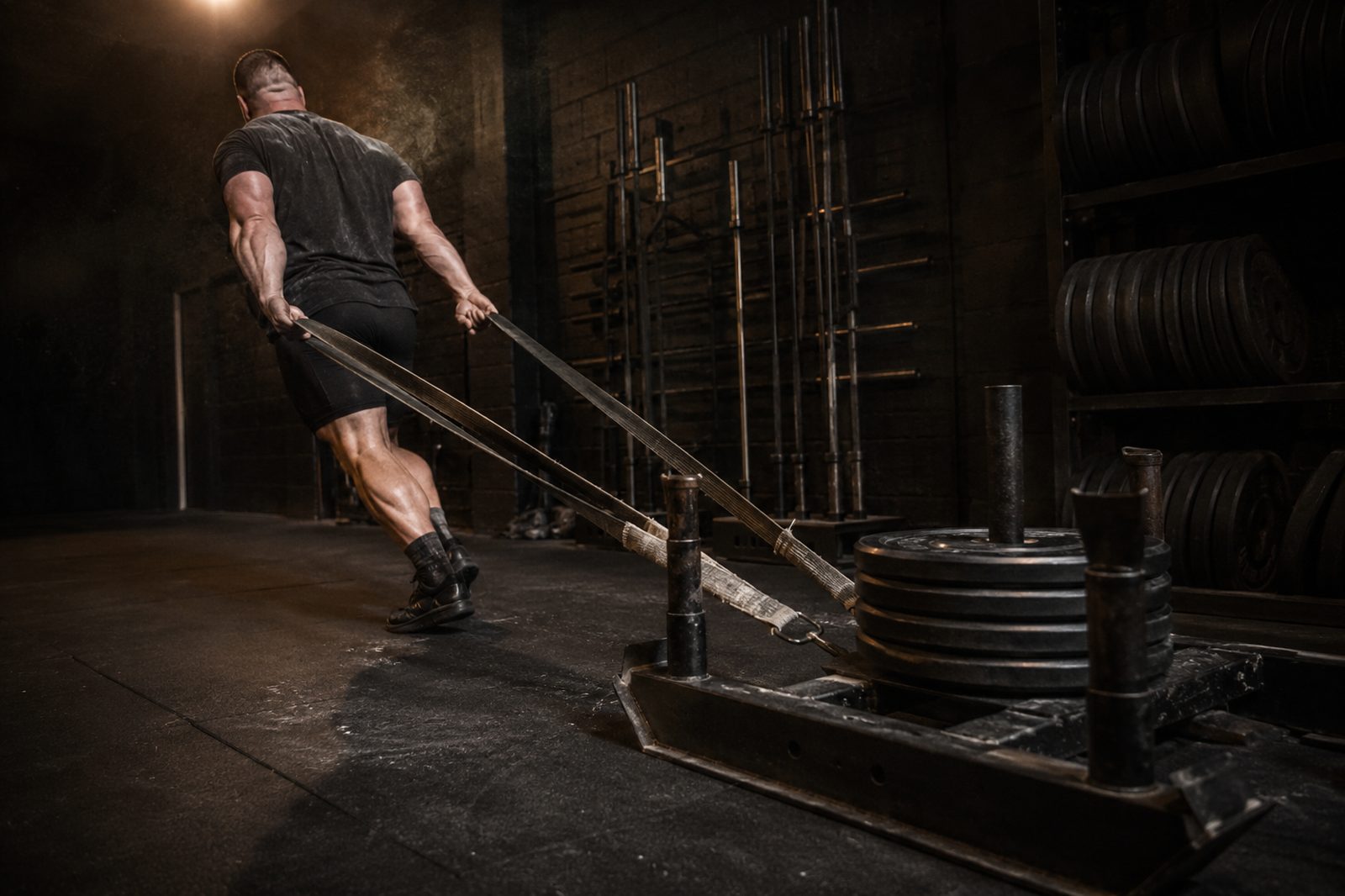
Sit down for a second. Before you load another plate on the bar, I want to talk about the one tool in this gym I'd fight you over if you tried to skip it: the sled.
You've asked me more than once what do sled drags do that a barbell can't, and why I program them every week without fail. Here's the answer — straight, the way I'd give it to any lifter serious about staying strong and staying healthy.
The Old-School Lore: How Backwards Pulling Built the Deadlift
There's a piece of strength lore that's stuck with coaches for generations: old-time loggers dragging logs backward through the woods, hour after hour, building deadlifts that would embarrass most "trained" lifters today. Whether every detail holds up, it points to a real truth — walking backward under load builds bulletproof knees and a punishing posterior chain.
Here's why those guys got so strong:
- Constant tension. Pulling a log meant no rest — tension all day, every day.
- Massive grip. Holding heavy ropes for hours forged world-class forearms.
- Torque production. Walking backward forces the hips and glutes to drive into the ground.
- Spine protection. Unlike a heavy deadlift, dragging a log backward keeps the spine upright.
- Isolating the drive. That upright posture makes the legs do nearly all the work.
- Perfect carryover. The hip extension you use to step backward mirrors a heavy lockout almost exactly.
You don't have a forest. You have a sled. Same lesson, controlled dose.
Why the Reverse Sled Drag Is a Cheat Code
I'm not the only coach who landed here. Ben Patrick — the "Knees Over Toes Guy" — built a following on backward dragging, and the late Louie Simmons at Westside Barbell programmed sled work for world-record powerlifters decades ago. Neither was chasing a trend. They understood what the loggers stumbled into.
So when you ask what do sled drags do for a lifter like you, here's the short list:
Read that list again. Strength, conditioning, and rehab in one movement, with no soreness tax. That's why it's a staple, not a finisher I throw in when I'm bored.
How We're Going to Use It
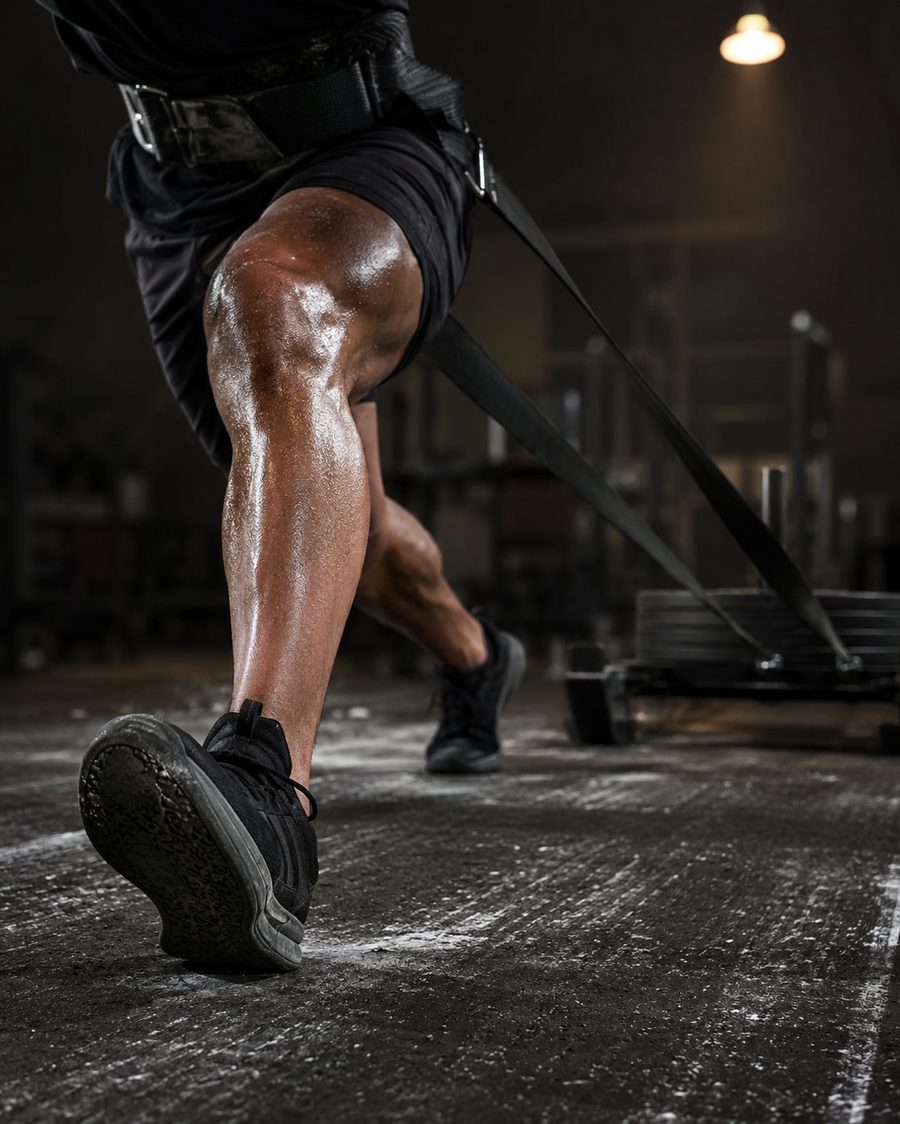
You don't need anything fancy. Hook the sled to a waist belt, or grab the straps in your hands. Then pick your goal:
For knee health: Go light and drag for distance — 200 to 400 meters of steady backward walking. We're flushing the joint, not maxing out.
For deadlift power: Load it heavy and keep the bouts short — 50-meter power walks with intent behind every step. This is where you build the drive that finishes your lockout.
Your posture cue, every rep: Chest up. Sit back into your hips like you're lowering into a chair. Push through your toes. If your back rounds or your chest drops, the weight's too heavy — lighten it and earn the position.
Sled work is the low-cost filler inside a periodized powerlifting plan built backward from meet day: it adds conditioning and work capacity in the blocks where heavy barbell volume has to stay controlled.
The Bottom Line
I love a heavy barbell as much as you do. But the bar takes a toll. Every rep you grind has a lowering phase that breaks tissue down and costs you recovery. The sled gives you the strength and the carryover without the bill.
So no, we're not cutting it from your program. Bulletproof knees, a stronger lockout, and conditioning that doesn't cost you your next big lift — that's not a side dish. That's a staple.
Now go grab the strap.
Sled Drag FAQ
What do sled drags do for your knees?
Walking backward under load drives blood into the patellar tendon and the VMO — the teardrop muscle above your knee that protects the joint. The sled strengthens knees and lower back without crushing the spine under heavy iron, making it one of the best knee-rehab and knee-bulletproofing tools available.
Why don't sled drags make you sore?
Sled work is concentric only — there is no lowering (eccentric) phase. Since eccentric muscle actions are the primary driver of muscle damage and delayed onset muscle soreness (DOMS), you can load the sled heavy and get a massive training effect without wrecking your recovery for the next heavy session.
How do you program sled drags for powerlifting?
For knee health, drag a light sled (bodyweight range) backward for 200–400 meters as a warm-up or recovery session. For deadlift power, load it heavy and keep bouts short — 50-meter power walks with full intent. Either way, keep your chest up, sit back into your hips, and push through your toes on every step.