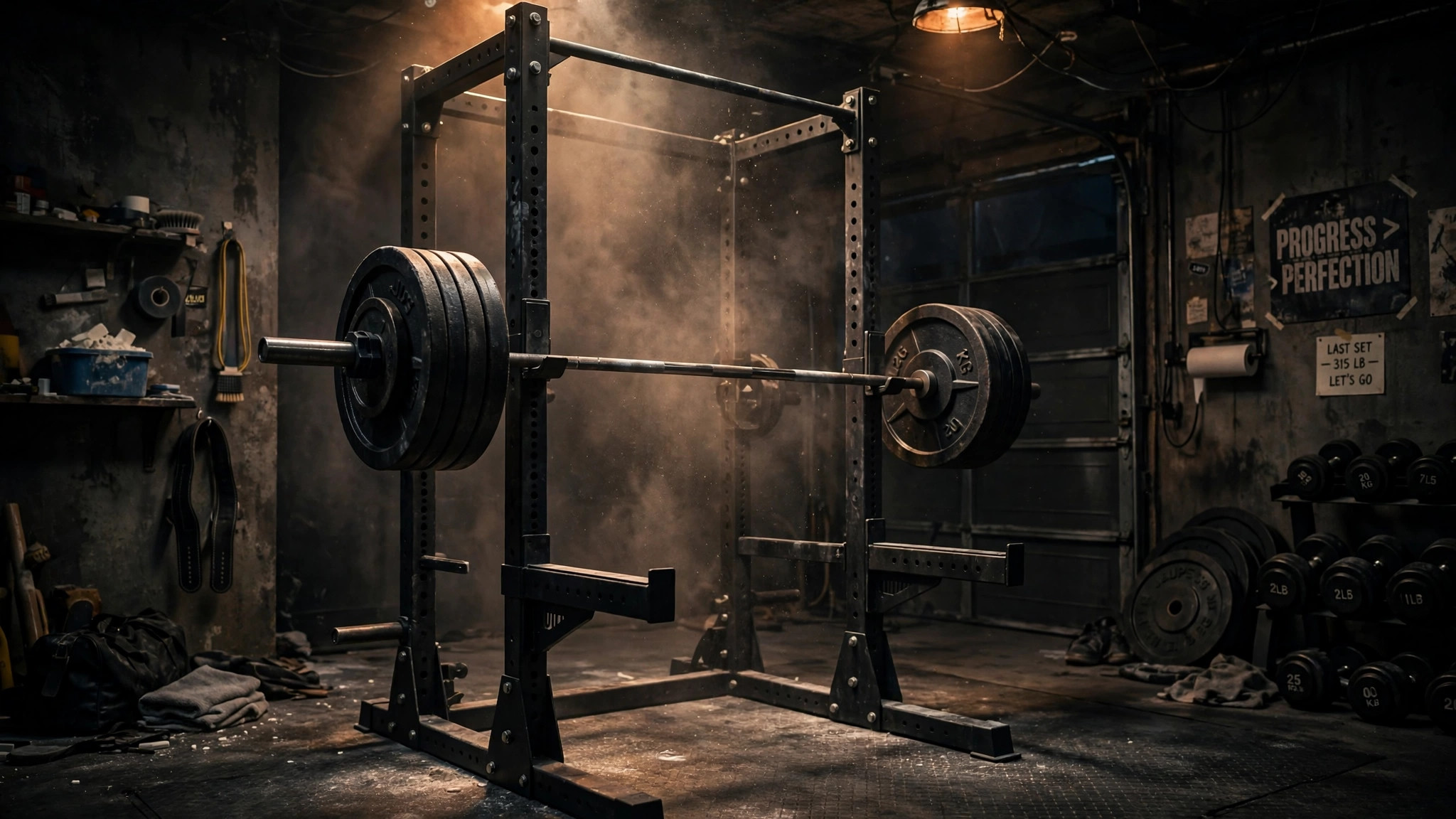
Most squat programs ask you to squat twice a week and be patient. The Russian squat program asks for the opposite: squat three times a week, every week, for six weeks straight, on a fixed schedule of percentages and reps that somebody else already figured out. No decisions. No improvisation. You just show up and do what the sheet says. At the end of week six, you test a weight that used to be a dream — 105% of your old max — for a single. And it works. It works so well that lifters have been running this cycle for decades, usually once, and usually with the faraway look of someone who just survived something.
What the Russian squat program actually is
The program comes out of the Russian national weightlifting system — the country that treated strength training like a science project and produced the results to prove it. It was popularized in the West by Pavel Tsatsouline, who published the cycle for English-speaking lifters and watched it become one of the most-run specialization programs in powerlifting and weightlifting. The structure is almost insultingly simple: six weeks, three squat sessions per week, percentages based on your current one-rep max. Nothing else changes. The program tells you the weight and the reps. Your job is obedience.
The mechanism is high-frequency specialization. Squatting three times a week builds skill — the movement gets grooved into your nervous system — and the steady wave of volume at 80% builds the muscle and work capacity behind the lift. The heavier days, appearing once a week, teach you to handle weight that scares you. It's not magic. It's what happens when you take the single lift that matters and give it all the training stress your body can absorb, on purpose, for six weeks.
Understand one thing up front: this is a specialization cycle, not a full program. It covers one lift. Everything else in your training — deadlift, bench, accessory work — goes on maintenance. You cannot run this and also push your deadlift. You cannot run this and also chase a bench PR. Six weeks, one lift, everything else coasts. Lifters who try to do more on top of the Russian cycle are the ones who end up injured, which is exactly what the program's critics point at when they call it dangerous. The program isn't dangerous. The program plus ambition is.
The full 6-week schedule
Here it is — the complete cycle, exactly as published. Percentages are of your current tested or confidently-estimated one-rep max. The notation is weight × sets × reps (so "80% 6×2" means six sets of two reps at 80% of your max). Train Monday, Wednesday, Friday, or any three days with a rest day between them. Rest two to three minutes on the light 80% days, and a full five minutes or more on the heavy days.
Week 1
Day 1: 80% 6×2
Day 2: 80% 6×3
Day 3: 80% 6×2
Week 2
Day 1: 80% 6×4
Day 2: 80% 6×2
Day 3: 80% 6×5
Week 3
Day 1: 80% 6×2
Day 2: 80% 6×6
Day 3: 80% 6×2
Week 4
Day 1: 85% 5×5
Day 2: 80% 6×2
Day 3: 90% 4×4
Week 5
Day 1: 80% 6×2
Day 2: 95% 3×3
Day 3: 80% 6×2
Week 6
Day 1: 100% 2×2
Day 2: 80% 6×2
Day 3: 105% 1×1 (test day)
Study the pattern. Weeks 1 through 3 are a volume wave at 80% — the sets climb from 2 to 6 and back, teaching your body to handle real squatting volume three times a week. Weeks 4 and 5 introduce the heavy days: 85% for fives, 90% for fours, 95% for triples, each flanked by easy 80% days that keep the groove without adding stress. Week 6 is the peak: two doubles at your old max on day 1, an easy 80% day on day 2, and then 105% for a single on day 3. The light days between the heavy days are doing real work — they keep technique sharp and blood flowing while the fatigue from the heavy day clears.
What this looks like in pounds: a lifter with a 315-pound squat max does weeks 1–3 at 250 pounds, hits 270 for sets of 5 in week 4, 285 for fours, 300 for triples in week 5, and tests 330 on the final day. That 15-pound jump — roughly 5% — is the program's advertised outcome, and lifters routinely report 10 to 20 pounds on their max after the cycle. Some get more. Nobody gets it for free.
What number to base it on
Every percentage hangs on one number: your one-rep max. Get this wrong and the whole six weeks misfires. The rule is simple and non-negotiable: base it on a max you have actually lifted, recently, with good depth. Not a max you hit two years ago. Not a calculator estimate from a set of five. Not the number you think you're good for on a perfect day. A real, recent, honest single.
If anything, be conservative. This program is designed for percentages that feel easy in weeks 1 and 2 and then get very real in weeks 4 through 6. A lifter who inflates the base number by 5% turns those "easy" weeks into moderately hard weeks — which sounds fine until week 4 arrives and the 85% day is actually 90% of what they can really do, three times a week, with fatigue compounding. The lifter who undershoots by 5% still gets the adaptation; the program's volume wave works at honest 80% just fine, and the final test still stretches them. Err low. The program rewards honesty and punishes ego.
If you haven't tested a true 1RM in the last month or two, take a week before the cycle starts: work up to a heavy single that moves well, call it your max, and start the program the following Monday. That honesty week costs you seven days and saves you six weeks of programming built on a lie.
Who the program is for — and who should skip it
The Russian squat cycle has prerequisites, and they're not optional. This is for the intermediate lifter with a real squat base — someone who has been squatting seriously for at least a year, whose technique is stable under load, and whose body already handles meaningful squat volume. As a rough line: if you can't squat your bodyweight for clean reps, you're not ready. This program takes an existing base and sharpens it; it does not build one.
It's also for lifters who can actually recover from three heavy-ish squat sessions a week. That means you're sleeping, eating enough to support training (this is not a cutting program — running a high-frequency squat cycle in a calorie deficit is a recipe for injury), and your life stress is manageable. If you're sleeping five hours a night and running on caffeine, the program will find you out by week 3.
Who should skip it: beginners, full stop — a novice adds weight to the squat every session with simple linear progression and doesn't need a specialization cycle. Anyone with a cranky back, knees, or hips that flare up under frequent loading. Anyone in a calorie deficit. Anyone who can't commit to all eighteen sessions — the program works by accumulation, and skipping the volume days breaks the wave. And be honest here: if you've been beat up, if your squat has been a grind for months, if your joints are already complaining about your normal training — this is not the six weeks that fixes that. Adding frequency to a struggling lift is how small problems become big ones. Fix the foundation first; the cycle will still be here in six months.
How to run it without getting hurt
The program is fixed. Your job is everything around it. Here's the operating manual the schedule doesn't print:
Everything else goes to maintenance. Deadlift goes light or goes away for six weeks — heavy pulls and high-frequency squatting fight over the same lower back and the back only has so much recovery. Bench continues at whatever you were doing, or slightly less. Accessory work stays light and short: a little upper-back work, some core, nothing that leaves you sore into the next squat day. This is the rule people break most, and it's the one that ends cycles early.
Eat like you mean it. You are asking your body to adapt to more squatting than it's ever done. That costs calories and protein. Eat at maintenance or a small surplus — roughly 1.6 to 2.2 grams of protein per kilo of bodyweight — and don't try to lose weight during the cycle. Lifters who run this while cutting report the same thing: the weights get heavy, the bar speed dies, and week 4 feels like week 8.
Sleep is part of the program. Eight hours if you can get it. The high-frequency days in weeks 2 and 3 — 80% for six sets of five and six — are the ones that separate lifters who recover from lifters who don't, and the difference is mostly made off the platform. The lifter sleeping seven-plus hours and eating enough will cruise those days. The lifter sleeping five will be grinding by day 2.
Warm up like it matters, because now it does. Three squat days a week means three days a week your knees, hips, and back need to be ready for work. Give yourself ten to fifteen minutes: bodyweight work, an empty-bar ramp, and your first working sets should never feel like a surprise. The 80% days are light enough that you can treat the first sets as extended warm-ups. The heavy days need the full treatment.
Don't add. Don't add a fourth squat day. Don't add sets because the 80% day felt easy. Don't superset anything heavy with the squats. The program's light days are light on purpose — they're the recovery mechanism that lets the heavy days happen. Adding work to them is like spending your rest days. The cycle is six weeks long. You can survive boredom for six weeks.
Respect the rest periods. Two to three minutes on the 80% days; five full minutes — timer running — on the 85% day, the 90% day, the 95% day, and the test. Incomplete rest on a heavy day turns a planned triple at 95% into a grinder that costs you the next two sessions. Rushing the cycle is the most common way lifters turn week 5 into a wall.
The over-40 reality check
Let's be straight, because the CMS audience skews 40-plus and this program was not designed with a 48-year-old's recovery in mind. High-frequency squatting is a young man's game in the sense that it demands fast recovery, and recovery is the first thing age taxes. That doesn't mean you can't run it. It means you run it with your eyes open.
The honest risks after 40: the knees and the lower back take more abuse from frequency than from intensity. Three sessions a week means three sessions of spinal loading, three sessions of knee flexion under load, and the connective tissue that once bounced back in 48 hours now wants 72. The 80% volume days in weeks 2 and 3 — 6×5 and 6×6 — are the danger zone for an older lifter, not the heavy singles. Volume is what grinds joints; intensity is what tests them.
So the modifications, if you're over 40 and determined: run the percentages on a conservative base — take your honest max, subtract 5%, and run the cycle on that. The adaptation still happens; the joints thank you. Take the full rest days between sessions — Monday/Wednesday/Friday, no compressing. Consider a two-day-per-week version — some older lifters run the same six-week progression but spread across two squat days per week over nine weeks, keeping the heavy/light wave but giving recovery an extra day. It stretches the cycle, but the pattern is what matters, not the calendar. And keep a hard rule: if joint pain — not muscle soreness, joint pain — shows up in week 2 and doesn't clear by the next session, you stop the cycle. Soreness is the price of admission. Joint pain that lingers is the body telling you this isn't your six weeks.
The alternative for lifters who love the idea but not the risk: a submaximal approach to the same frequency — three squat days a week at honest 70–75% with a progression you control. You get most of the skill-building and much of the volume adaptation with a fraction of the joint stress. It's not the Russian program. It's the Russian program's smarter older brother, and for some lifters it's the better call.
What to do after week 6
You tested 105%. Now what? The program ends with a peak, and peaks are not places to live. Take a deload week — cut squat volume in half, keep it light, let the accumulated fatigue clear. Then retest or don't; the 105% single was the test. What you have now is a new max and six weeks of high-frequency practice behind you.
Do not run it again immediately. Back-to-back cycles are the classic way to turn a great six weeks into a chronic injury. Your body needs to consolidate — run a normal balanced program for at least eight to twelve weeks, let the deadlift come back, let your other lifts breathe. Most lifters run this cycle once or twice a year at most, usually as a focused block before a meet or a testing phase. It's a tool you reach for, not a lifestyle.
What the cycle gives you permanently: better squat technique under fatigue, a higher work capacity for the lift, and — this is the underrated part — confidence with heavy weight on your back. The lifter who has handled 95% for triples and 105% for a single walks into their next training block a different animal. Fold that new max into your regular programming: recalculate your training percentages, adjust your blocks, and build the next cycle on the strength this one earned you.
Five mistakes that kill the cycle
1. Basing it on a fantasy max. The single most common failure. An inflated base turns every week up one notch, and the notch that matters is week 4's 85% day — programmed at a weight you can handle, disastrous at a weight you can't. Honest max or don't start.
2. Keeping the deadlift heavy. The lower back does not care about your plans. Heavy pulls during a high-frequency squat cycle compete for the same recovery, and the squat loses — usually right when the heavy weeks arrive. Park the deadlift for six weeks. It'll be there when you get back.
3. Skipping the easy days. The 80% 6×2 days look like nothing on paper. They're the recovery mechanism. Skipping them doesn't save recovery; it breaks the rhythm the cycle is built on. Show up, do the light work, leave.
4. Adding volume because week 1 felt easy. Week 1 is supposed to feel easy. The program is a wave — it builds. The lifter who adds sets in week 1 is the lifter who drowns in week 4. Follow the sheet.
5. Testing early. Week 5's 95% triples are not an invitation to max out. The test is week 6, day 3 — 105% for a single. Every max taken early steals from the adaptation and the recovery the real test needs. The sheet knows when to test. You don't need to help.
The bottom line
The Russian squat program is six weeks of beautifully simple brutality: squat three times a week, follow the percentages, test 105% at the end. It works because specialization works — when you give one lift all of your training stress, that lift gets stronger. It demands an honest max, eighteen sessions of discipline, food and sleep to match, and the humility to let everything else coast. After 40, run it on a conservative base or don't run it at all — the joint math is real. Pick your six weeks, follow the sheet exactly, and walk out with a bigger squat and the quiet satisfaction of having survived something most lifters only talk about.